


Understanding Prediction Markets and Sports Betting Activities
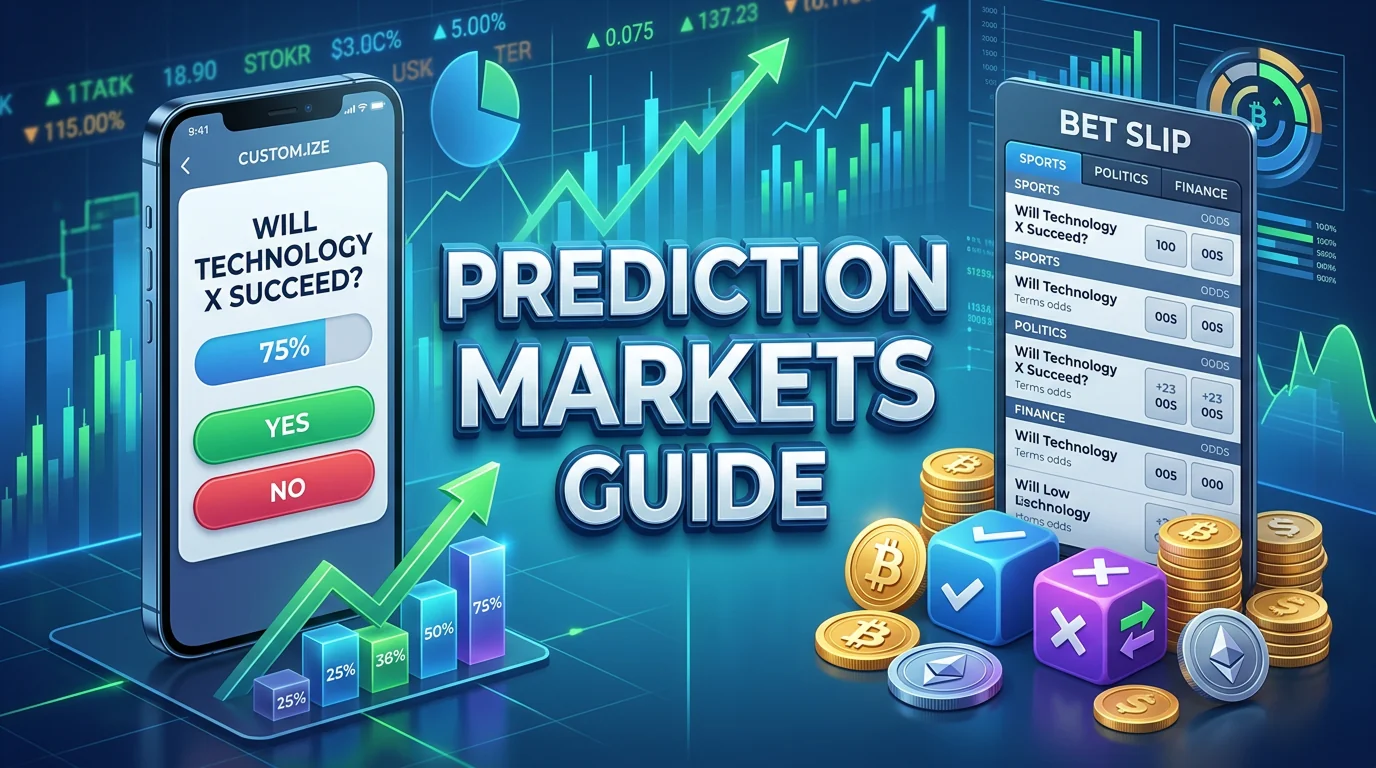
In my experience, prediction markets and sports betting appear similar. Both involve placing capital on an uncertain future outcome. A critical difference is intent. Gambling bets are recreational transactions with a sportsbook. Prediction markets are financial instruments designed to surface accurate probability forecasts. You bet to win cash; you trade shares to acquire information, and the best way to explore this innovative form of sports finance is through a dedicated prediction market app. These platforms aggregate and price collective intelligence, moving beyond traditional betting activities to harness crowd wisdom. A functional prediction market requires three core components.
- A clearly defined, binary outcome like "Will Team X win the championship?"
- A trading exchange where users buy 'Yes' or 'No' shares.
- A real-time price that reflects the market's forecasted probability.
- A liquidity pool, often subsidized, to enable initial trading.
- Reliable, timely resolution based on verifiable real-world events.
The final share price at market close, say $0.75, translates to a 75% forecast. I find the price signal more nuanced than any single expert's opinion. Trading volume and price movement often provide sharper insights than traditional polls.
The Role of Sportsbooks vs. Prediction Markets in Winning Forecasting
Sportsbooks set lines to balance their book and ensure profit. Betting on these lines is a wager against the house. I use a comparison table to clarify.
| Brand | Primary Function | Price Source | My Verdict |
|---|---|---|---|
| FanDuel Sportsbook | Accept recreational bets | Internal oddsmakers | For pure gambling entertainment. |
| Betfair Exchange | Peer-to-peer betting exchange | User-driven order book | Closer to a market; lower margins. |
| Kalshi | Regulated event derivatives | User trading | A financial instrument for forecasting. |
Key Differences Between Gambling Bets and Financial Market Predictions
I treat them as distinct activities. A bet at a sportsbook is a closed contract between you and the house. Its odds include the book's profit margin, or "vig," which is typically 10%. You can't sell your bet position before an event ends. A contract on a prediction exchange like Kalshi is a tradeable asset. Its price fluctuates with incoming news, allowing you to exit a position early for a profit or loss. This liquidity transforms speculation into a dynamic forecasting tool.

A Comparison of Top Sports Prediction and Live Betting Platforms
After testing both types, I categorize them by user intent. Platforms like DraftKings focus on rapid, in-play live betting with high entertainment value. Others prioritize the informational signal of the market itself. My biggest personal takeaway came from comparing the two experiences side-by-side.
The dopamine hit of a winning bet is immediate and personal. The intellectual satisfaction of a correct market forecast, however, comes from seeing the crowd's wisdom validated—a fundamentally different reward.
Analyzing Forecasts: How Experts and Algorithms Improve Predictions
Better forecasting comes from structured analysis, not gut feeling. I recommend these specific tactics.
- Weight prediction market prices more heavily than any single pundit's pick.
- Track line movement in the 24 hours before an event for sharp money signals.
- Compare algorithmic models from sites like FiveThirtyEight to market prices.
- Scrutinize injury reports and weather data—markets react within seconds.
The convergence of different models often indicates high confidence. I've found a 15%+ divergence between a respected model and the market price signals a potential value opportunity. Markets are best at aggregating known information; models can better account for deep statistical trends.
Navigating Legal Sports Finance and Competitive Prediction Markets
The legal landscape defines what you can access. Your location dictates platform availability and the tax treatment of winnings. I've mapped the status of key platforms in the US market.
| Platform Type | Legal Status (US) | Regulator | Access States |
|---|---|---|---|
| Retail Sportsbook | Legal, State-by-State | State Gaming Commissions | ~30+ |
| Peer-to-Peer Exchange | Limited (e.g., Betfair in NJ) | State & Federal | 2-3 |
| Prediction Market (Kalshi) | CFTC-Regulated Exchange | Commodity Futures Trading Commission | 49* |
The Future of Sports Prediction: AI, Forecasters, and Real-Time Markets
I expect markets and machines to merge. We already see AI models ingesting vast datasets to generate forecasts. The next step is these models actively trading on prediction exchanges, creating hyper-efficient real-time prices. Human forecasters will shift to managing AI strategies and interpreting market sentiment anomalies. The true competition will be between different AI agents, with humans acting as overseers. Live event pricing will become instantaneous, narrowing arbitrage windows to milliseconds.
FAQ
Aren't prediction markets just a fancy form of gambling?
No, their core purpose differs. Gambling is a recreational bet against a sportsbook. Prediction markets are designed as financial tools to aggregate information and produce a forecast price.
Can I actually make money using a prediction site?
Yes, but you must treat it as a financial instrument, not entertainment. Success requires analyzing price signals, having a disciplined strategy, and using platforms like Kalshi that function as exchanges.
How do prediction markets get their forecasts?
The forecast is the real-time price of a contract. A share price of $0.75 means the market collectively forecasts a 75% probability of that outcome happening.
Are these markets legal in the United States?
It's a complex patchwork. Traditional sports betting is state-regulated. Some peer-to-peer exchanges are limited. Platforms like Kalshi are federally regulated by the CFTC, which is a key legal distinction.
What's the biggest mistake beginners make?
Blurring the line between seeking informational forecasts and seeking a thrill. You must separate entertainment betting on sportsbooks from informational trading on prediction exchanges.
Will AI replace these markets?
Not replace, but dominate. I expect AI agents to become primary traders, creating hyper-efficient prices. Human roles will shift to strategy oversight and interpreting market sentiment anomalies.